


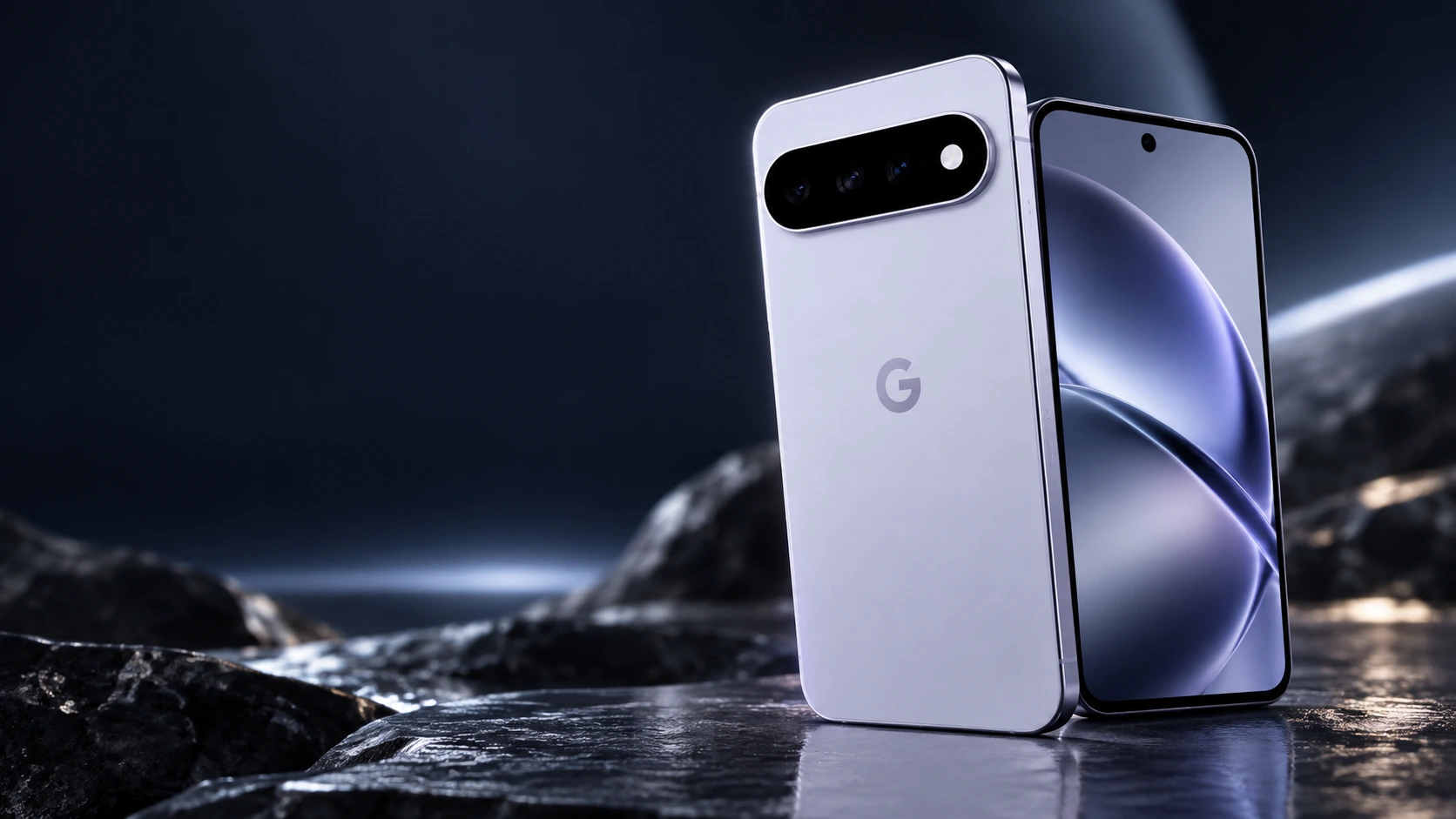
Google Pixel 11 is one of the most important Android launches of 2026 because Google has changed the base model in ways that matter more than a simple yearly spec bump. The phone now starts at $899 in the U.S., doubles base storage to 256GB, keeps a 5x telephoto camera, adds the Tensor G6 chip, and leans even harder into Gemini-powered features such as Magic Capture.
That also makes the buying decision more complicated. At $899, the Pixel 11 is no longer an obvious value flagship, especially when Samsung and Apple sit close by on price. This guide focuses on the seven things that matter most before buying — based on Google’s official specifications and recent independent testing, not hands-on testing by Quantum Gadget Hub.
1. The Pixel 11 now starts at $899 in the U.S.
The biggest change for many buyers is price. Google lists the Pixel 11 at a $899 U.S. MSRP. That is higher than last year’s base Pixel, but Google has also made the entry configuration much more generous: 256GB of storage and 12GB of RAM are now standard.
That matters because 256GB is a far more comfortable starting point for buyers who keep phones for several years, shoot a lot of photos and video, or download offline media. Google also offers a 512GB configuration, using Zoned UFS storage for faster performance.
Independent reviewers have reached a similar conclusion on value. The Verge called the standard Pixel 11 the smartest buy in Google’s 2026 lineup because it shares the same core Tensor G6 platform as the Pro while costing $200 less. Android Authority also praised the base model’s overall value while criticizing the higher launch price.
2. Tensor G6 makes the phone smarter, not necessarily class-leading in raw speed
The Pixel 11 is powered by Google’s Tensor G6 chip and Titan M3 security coprocessor. Google says Tensor G6 improves web browsing by 25%, app launch times by 15%, and on-device AI processing significantly compared with the previous generation.
The more important story is what Google is doing with that silicon. Tensor G6 runs the latest Gemini Nano models and is designed around local AI workloads, imaging, security and personalization rather than benchmark dominance.
That strategy is different from Qualcomm’s approach with its latest flagship chips. If you want the broader context, our Snapdragon 8 Elite Gen 6 analysis explains how Android’s performance race is shifting toward on-device AI and sustained efficiency.
3. The camera hardware is better than the base model name suggests
Google equips the Pixel 11 with a triple rear-camera system: a 48MP main camera, 13MP ultrawide, and 10.8MP 5x telephoto lens with optical stabilization. The main camera uses a larger 1/1.56-inch sensor, and Google says it is 56% more light-sensitive than the previous generation under its testing conditions.
The telephoto remains one of the most important differentiators at this price. The 5x optical lens supports Super Zoom up to 30x, while the main and telephoto cameras both include optical and electronic stabilization.
Independent testing is encouraging. Android Authority found the Pixel 11 camera system especially strong for the price, while The Verge still considers the Pro models better choices for buyers who prioritize camera hardware above everything else.
4. Magic Capture is the most interesting new camera feature
Magic Capture is one of Google’s headline Pixel 11 features. Instead of forcing you to choose between shooting photos and video during a fast-moving moment, the phone can analyze roughly 400 frames from a capture session and automatically generate well-timed 12MP still images while also preserving video.
Google says Magic Capture can also apply light edits such as cropping, straightening and unblurring when appropriate. The idea is simple: start recording the moment, then let the phone identify the strongest frames afterward.
This is a good example of where the Pixel 11’s value is less about raw hardware and more about software integration. Camera Looks adds another layer by allowing users to choose different visual styles at capture time rather than applying everything after the fact.
5. Battery and Qi2 charging are practical upgrades
The Pixel 11 uses a 4,985mAh typical battery. Google rates it for more than 30 hours of battery life under its test methodology. Wired charging can reach around 55% in 30 minutes with a compatible 30W USB-C PPS charger.
The bigger convenience upgrade is Pixelsnap wireless charging. The Pixel 11 supports Qi2.2-certified magnetic charging at up to 25W, making magnetic accessories and chargers much easier to use than on older Pixel models.
For buyers moving from an older Android phone, Qi2-style magnetic alignment can be one of those quality-of-life improvements that becomes more useful over time than a benchmark gain.
6. You are buying Google’s software experience as much as the hardware
Pixel 11 ships with Android 17 and is built around Gemini Intelligence. Google’s pitch is increasingly proactive assistance rather than simply a better chatbot inside the phone.
Some of those features are useful today, while others still depend heavily on Google services and user permissions. Reviewers have also found that the most ambitious proactive features can be inconsistent. That is worth remembering if AI is one of your main reasons for considering the phone.
The upside is that Pixel remains the clearest way to experience Google’s vision for Android. Camera features, call screening, spam protection, Gemini integration and system-level AI tend to appear here first or work most deeply here.
7. Pixel 11 vs Pixel 11 Pro: the base model may be the better buy
| Feature | Pixel 11 | Pixel 11 Pro |
|---|---|---|
| U.S. starting price | $899 | $1,099 |
| Processor | Tensor G6 | Tensor G6 |
| RAM | 12GB | Pro-tier configuration |
| Base storage | 256GB | 256GB |
| Telephoto | 5x optical, 10.8MP | Higher-end Pro camera system |
| Best for | Most buyers | Camera-first buyers and premium features |
The standard Pixel 11 gets the same Tensor G6 platform, 12GB of RAM, 256GB base storage and a 5x telephoto camera while starting $200 below the Pixel 11 Pro. That makes the Pro easier to justify for buyers who specifically need its upgraded display, camera hardware and premium extras, but harder to justify for everyone else.
Should you buy the Google Pixel 11?
Pixel 11 is easiest to recommend to buyers who want Google’s software experience, strong cameras, 256GB of base storage and long-term Android support without moving above $1,000. It is also a particularly sensible choice for people upgrading from an older Pixel because the combination of Tensor G6, Qi2 charging, improved cameras and new AI tools is more substantial than a typical yearly refresh.
The reasons to hesitate are also clear. $899 is no longer inexpensive, Tensor still is not designed to dominate raw performance benchmarks, and buyers who care mainly about gaming performance or maximum camera hardware may find stronger alternatives elsewhere.
QGH perspective
The Pixel 11 works because Google has made the standard model less compromised. A 5x telephoto, 256GB base storage, 12GB of RAM and Qi2 charging all belong on a serious flagship, and the Tensor G6 platform gives Google enough headroom to keep pushing its AI-first software strategy.
The risk is pricing. At $899, Google is asking buyers to judge Pixel 11 alongside some of the strongest phones in the U.S. market rather than as the cheaper enthusiast alternative it once was. That makes discounts especially important. If the phone drops meaningfully below MSRP, the value case becomes much stronger.
For more current smartphone coverage, see our iPhone 18 Pro variable aperture explainer, browse the QGH Reviews hub, or follow the latest launches in Tech News.
Sources and methodology
This article is a research-based buying guide, not a hands-on Quantum Gadget Hub test. Specifications, U.S. pricing and feature descriptions were checked against the Google Store Pixel 11 specifications and Google’s official Pixel 11 launch coverage. Practical buying context was cross-checked against recent reviews from The Verge and Android Authority. Manufacturer performance claims are identified as such rather than presented as independent measurements.
[…] broader AI hardware strategy, the Pixel Watch 4 fits naturally alongside devices such as the Google Pixel 11, where Gemini and on-device AI are becoming increasingly central to the overall […]