


QGH TECH NEWS · MOBILE SILICON
The real story is not just 5 GHz — it is how Qualcomm is splitting the flagship Android market
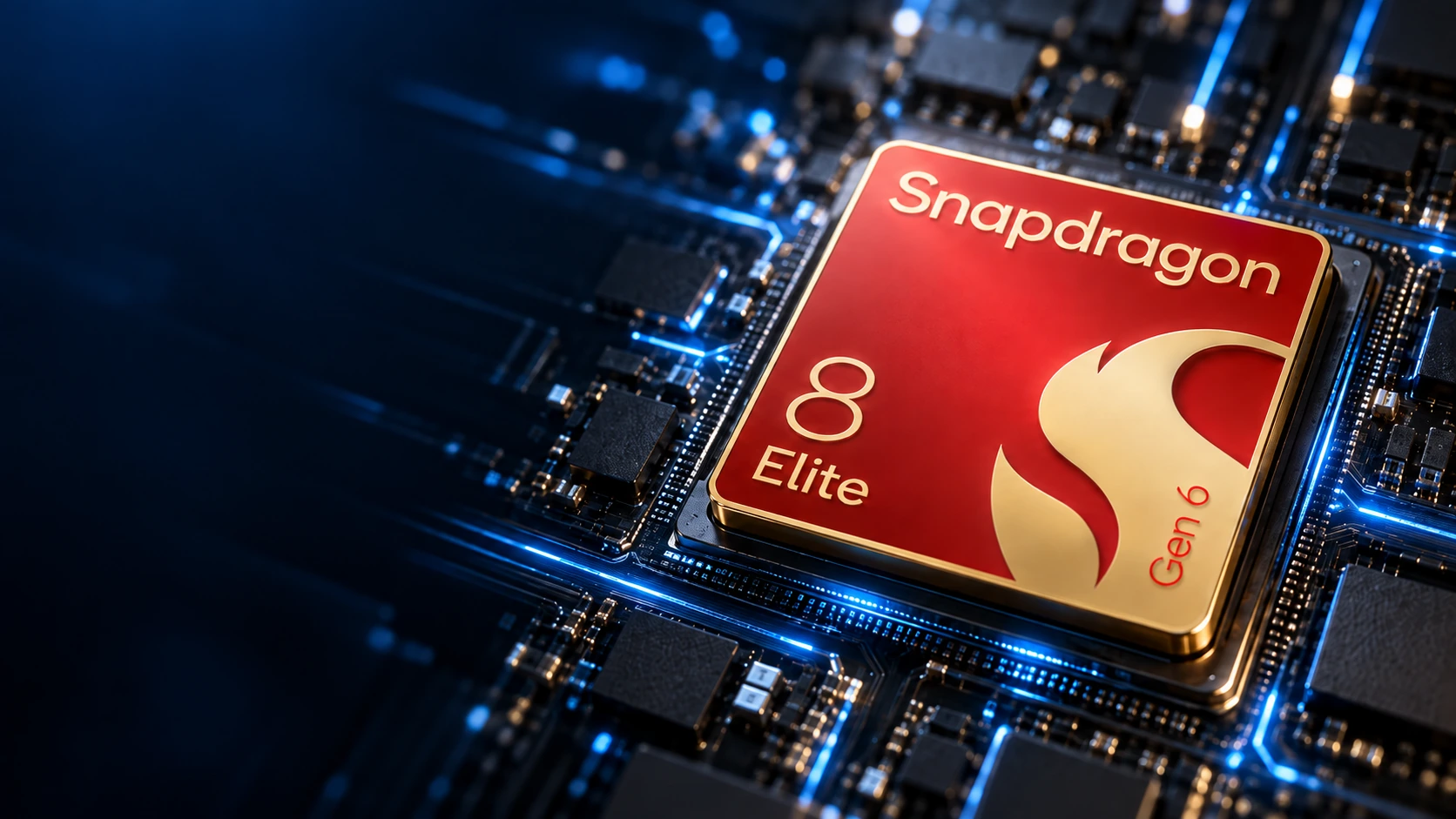
Snapdragon 8 Elite Gen 6 brings a 2nm process, a 5 GHz Oryon CPU, faster Adreno graphics and more proactive on-device AI. But Qualcomm now offers a second, more capable Extreme version, making the chip inside a 2027 Android phone more important than ever.
Key Takeaways
- Snapdragon 8 Elite Gen 6 is built on a 2nm process and uses Qualcomm Oryon CPU cores running up to 5 GHz.
- Qualcomm claims 10% higher CPU performance, 35% higher GPU performance and 14% higher NPU performance than the previous generation, alongside large efficiency gains.
- The new Hexagon NPU and Sensing Hub are designed for more personalized, proactive on-device AI agents.
- The regular Gen 6 does not receive every creator and gaming feature found in Snapdragon 8 Elite Extreme Gen 6.
- Qualcomm has confirmed future devices from HONOR, iQOO, Motorola, OnePlus, OPPO, REDMI, RedMagic, vivo and Xiaomi.
Table of Contents
Snapdragon 8 Elite Gen 6 is Qualcomm’s new mainstream flagship mobile platform for the next wave of premium Android phones. Announced at Snapdragon Summit 2026 alongside the more powerful Snapdragon 8 Elite Extreme Gen 6, it combines a 2nm manufacturing process, next-generation Oryon CPU cores, a reworked Adreno GPU, a reengineered Hexagon NPU and new connectivity hardware.
For buyers, the important question is not whether the specification sheet looks impressive. It is what these changes will actually mean once the chip appears in real phones. That matters because Qualcomm is now separating its top mobile silicon into two tiers: a balanced flagship platform and an Extreme version aimed at the most demanding gaming, AI and creator workloads. Follow our Tech News coverage for the broader context around new consumer hardware.
What is Snapdragon 8 Elite Gen 6?
Qualcomm describes Snapdragon 8 Elite Gen 6 as its balanced premium platform. It shares the same 2nm process node and core technology family as the Extreme model, including Qualcomm Oryon CPU cores, Adreno graphics, the Hexagon NPU, the X105 5G modem and FastConnect 8800.
The headline figure is a CPU clock speed of up to 5 GHz. Qualcomm says the Oryon CPU delivers around 10% more performance than the previous generation while improving power efficiency by 37%. The company also claims a 35% GPU performance increase with a 40% efficiency improvement, while the Hexagon NPU receives a 14% performance uplift. Those figures are vendor comparisons and real-world results will vary by phone cooling, memory configuration and manufacturer tuning.
That distinction is important. A mobile processor sets the ceiling for performance, but the phone around it determines how much of that performance users actually see over long gaming sessions, camera workloads or sustained AI tasks.
Agentic AI is the bigger strategic change
Qualcomm is positioning the Snapdragon 8 Elite Gen 6 generation around what it calls agentic AI: assistants that can use context, remember preferences and perform multi-step tasks rather than simply answer a single prompt. The reengineered Hexagon NPU adds a new Element Accelerator and a larger shared-memory architecture intended to improve transformer inference and keep more AI processing on the device.
The Qualcomm Sensing Hub also plays a larger role. It includes dual Micro NPUs and low-power sensing hardware designed to process context continuously without waking the main processor for every task. Qualcomm says this can support more proactive personalization while keeping more data local to the phone.
The hardware capability is only half the equation. Whether these features become genuinely useful depends on Android, phone makers and app developers building experiences that can use them. That is why the broader shift toward AI agents across phones, wearables and other devices matters as much as benchmark scores. Our AI Tech Agent section tracks that transition, while Meta Connect 2026 offers another example of companies moving AI from apps into persistent personal devices.
Gaming gets faster, but the Extreme chip gets the biggest graphics upgrade
The regular Snapdragon 8 Elite Gen 6 receives Qualcomm’s new Adreno GPU architecture and the company claims a 35% performance gain with 40% better efficiency. That combination could matter more than peak frame rates because sustained gaming performance is often limited by heat and battery consumption.
However, Qualcomm reserves some of its most ambitious graphics technology for Snapdragon 8 Elite Extreme Gen 6. The Extreme platform adds dedicated Adreno matrix cores and Adreno Neural Fusion, which can use AI-based super resolution and frame generation to reconstruct higher-resolution frames and increase perceived frame rate while reducing the amount of conventional rendering work.
That means buyers should not assume that every phone carrying “Snapdragon 8 Elite Gen 6” branding will offer the same gaming feature set. The exact chip variant now matters.
Camera and video: strong improvements, but pro features move to Extreme
The standard Gen 6 platform includes Qualcomm’s Elite Color Engine, Motion Intelligence and Intelligent Pixel Control. Qualcomm says these technologies can improve scene understanding, reduce visual artifacts and stabilize moving subjects more intelligently.
The difference between the two chips becomes clearer for video creators. Snapdragon 8 Elite Extreme Gen 6 supports Advanced Professional Video (APV), 8K recording at up to 60 fps and 4K slow motion at up to 240 fps. Independent analysis from Android Authority notes that the regular Gen 6 is limited to 8K30 and 4K120 and does not include APV hardware support.
For most users, that may not be a deal-breaker. For people who buy flagship phones specifically for high-end video production, it is a meaningful distinction and another reason to check the exact silicon inside a phone rather than relying on the broader Snapdragon family name.
Snapdragon 8 Elite Gen 6 vs Extreme Gen 6
| Feature | Snapdragon 8 Elite Gen 6 | Snapdragon 8 Elite Extreme Gen 6 |
|---|---|---|
| Process | 2nm | 2nm |
| Oryon CPU | Up to 5 GHz | Up to 5 GHz |
| Hexagon NPU | Reengineered NPU | Reengineered NPU with higher-end AI positioning |
| Adreno matrix cores | No | Yes |
| Adreno Neural Fusion | No | Yes |
| APV codec | No | Yes |
| 8K video | Up to 30 fps | Up to 60 fps |
| 4K slow motion | Up to 120 fps | Up to 240 fps |
| 5G modem | X105, up to 14.8 Gbps downlink | X105, up to 14.8 Gbps downlink |
| Wi-Fi | FastConnect 8800, Wi-Fi 8 support | FastConnect 8800, Wi-Fi 8 support |
The split is unusual because the regular Gen 6 is not simply a slower version of the Extreme chip. It deliberately omits some high-end graphics, memory and video capabilities. Android Authority argues that several of those omissions make the standard chip feel closer to a more affordable flagship tier than a direct replacement for every capability of the previous Elite generation.
Connectivity: X105 5G and Wi-Fi 8
Both Gen 6 platforms use Qualcomm’s X105 5G Modem-RF system with theoretical peak download speeds of up to 14.8 Gbps and upload speeds up to 4.2 Gbps. They also use FastConnect 8800, which supports Wi-Fi 8 as well as Wi-Fi 7 and Wi-Fi 6.
Peak figures are not representative of normal mobile use, but the connectivity platform matters for future devices because it combines newer wireless standards with AI-assisted radio optimization. Actual speeds will still depend on carriers, routers, spectrum and local network conditions.
Which phones will use Snapdragon 8 Elite Gen 6?
Qualcomm has confirmed that devices using the Snapdragon 8 Elite Gen 6 family will come from HONOR, iQOO, Motorola, OnePlus, OPPO, REDMI, RedMagic, vivo and Xiaomi. Qualcomm has not assigned every manufacturer to a specific regular or Extreme variant in its launch announcement, so individual device specifications will need to be checked as each phone is unveiled.
This is likely to create a wider spread inside the premium Android market. Some flagships may use the regular Gen 6 to balance cost, battery life and performance, while Ultra, Pro or gaming-focused devices can justify the Extreme chip. That could make processor tiering a more visible part of smartphone buying decisions in 2027.
What Snapdragon 8 Elite Gen 6 means for 2027 Android phones
- More AI will run locally. The NPU and Sensing Hub are designed for assistants that use personal context without sending every interaction to the cloud.
- Efficiency may matter more than raw CPU gains. Qualcomm’s claimed CPU performance increase is relatively modest, but its efficiency improvements could translate into better sustained performance and battery life.
- Gaming becomes more segmented. The regular Gen 6 gets faster graphics, but the Extreme model receives the most advanced AI rendering hardware.
- Camera capability will depend even more on the phone maker. Qualcomm provides the processing platform, but sensors, lenses, thermal design and image tuning remain OEM decisions.
- Chip names will require closer attention. Two phones in the same flagship family may now have materially different creator and gaming capabilities depending on whether they use Gen 6 or Gen 6 Extreme.
Should you wait for a Snapdragon 8 Elite Gen 6 phone?
If you are already planning to buy a 2027 flagship Android phone, the new platform is worth watching. But the processor alone should not decide the purchase. Battery capacity, thermal design, camera hardware, software support and price will usually have a bigger effect on day-to-day ownership than a single benchmark score.
The new two-tier strategy also makes early device reviews especially important. A phone with the regular Gen 6 may offer better value and excellent efficiency, while an Extreme-powered model may make more sense for mobile gaming, local AI workloads or advanced video creation. QGH will evaluate those trade-offs as devices reach the market in our Reviews section.
QGH perspective
Snapdragon 8 Elite Gen 6 looks less like a simple annual speed upgrade and more like a change in how Qualcomm structures the Android flagship market. The regular chip prioritizes broad premium performance and efficiency, while Extreme becomes the showcase for advanced AI graphics, creator video features and the heaviest on-device workloads.
The most important development may be the move toward persistent, context-aware AI. If phone makers can turn Qualcomm’s NPU and sensing hardware into genuinely useful assistants, the 2027 generation could feel different for reasons that have little to do with raw GHz. If they cannot, the biggest practical gains may simply be better graphics and efficiency.
Sources & methodology
This article separates manufacturer claims from QGH analysis. Specifications and claimed performance improvements come from Qualcomm’s Snapdragon 8 Elite Gen 6 product page and its Snapdragon Summit 2026 launch announcement. Differences between the regular and Extreme platforms were cross-checked against Qualcomm’s Extreme Gen 6 specifications and independent reporting from Android Authority. Real-world conclusions will be updated as retail phones become available for independent testing.
Continue exploring next-generation tech
Follow Quantum Gadget Hub for new Android hardware, AI devices and research-based product reviews.
[…] Alongside the camera upgrade, both phones use the A20 Pro chip and Apple’s next-generation vapor-chamber cooling system. If you are interested in how the wider mobile industry is approaching next-generation smartphone silicon and on-device AI, see our Snapdragon 8 Elite Gen 6 analysis. […]
[…] from Qualcomm’s approach with its latest flagship chips. If you want the broader context, our Snapdragon 8 Elite Gen 6 analysis explains how Android’s performance race is shifting toward on-device AI and sustained […]