


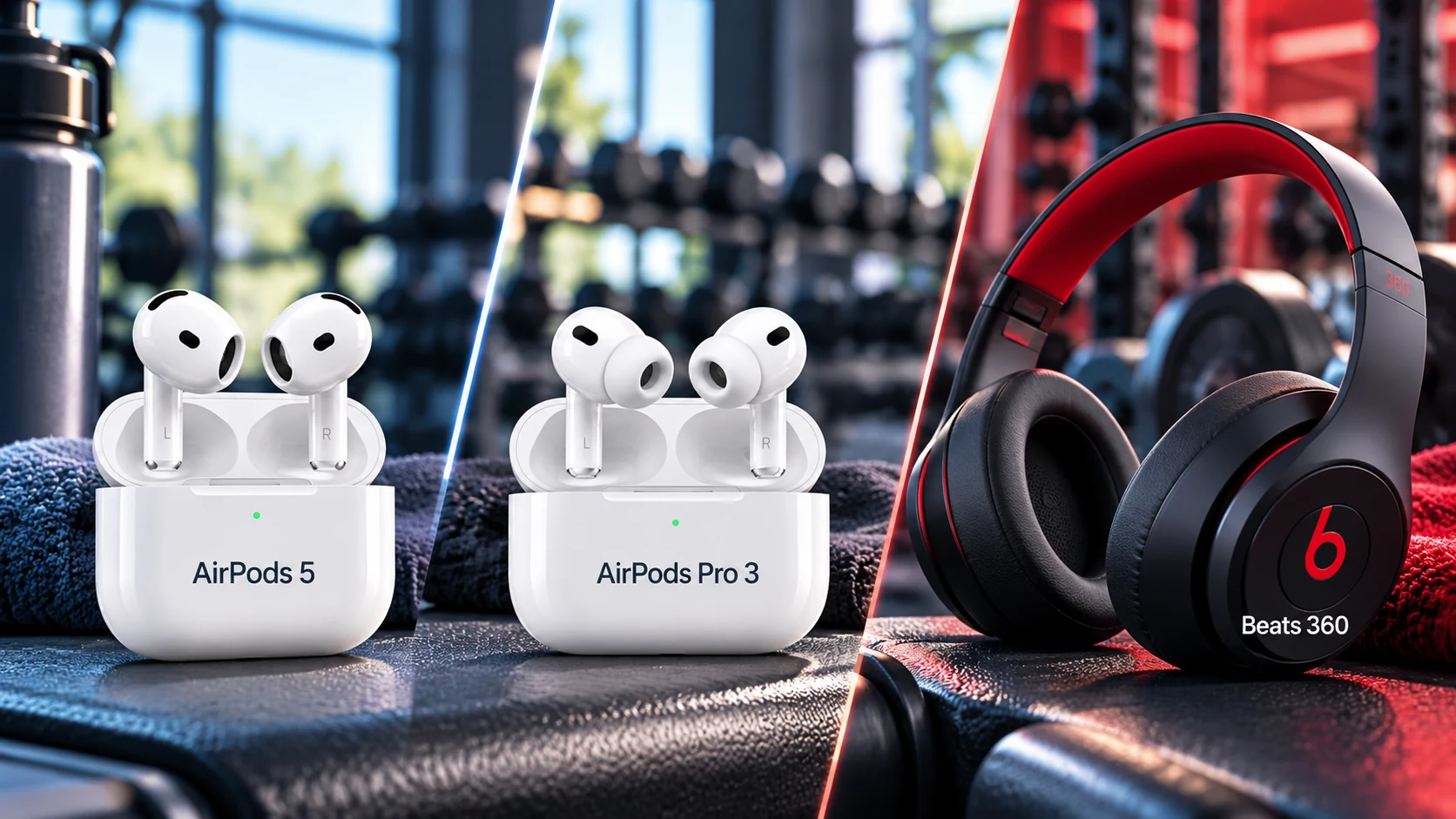
The best workout audio in 2026 depends less on one universal winner than on how you train. Lightweight earbuds suit high-impact sessions, sealed in-ear models offer stronger isolation, while workout-focused over-ear headphones can deliver longer battery life and a different comfort profile.
This guide compares three distinct Apple-ecosystem options already covered by QGH: AirPods 5, AirPods Pro 3 and Beats 360. Our goal is to help you choose the right format rather than declare one design best for everyone.
Quick picks
- Best value for everyday use plus lighter workouts: AirPods 5.
- Best for stronger isolation and fitness features: AirPods Pro 3.
- Best over-ear option for gym users: Beats 360.
What matters most for workout audio?
For training, sound quality is only part of the decision. Fit stability, sweat resistance, controls, battery life, isolation and how easily the product can be cleaned often matter more than small differences in audio tuning.
AirPods 5: best for open-ear comfort and value
AirPods 5 are the most approachable option for iPhone users who dislike silicone tips. Their open-ear fit makes them comfortable for many listeners and they still offer modern Apple noise-control and ecosystem features. The trade-off is that an open design cannot create the same passive seal as a Pro-style earbud.
Read our AirPods 5 review and AirPods 5 buying guide for the full breakdown.
AirPods Pro 3: best for isolation and fitness-focused features
AirPods Pro 3 are the stronger choice when you want a sealed fit, more aggressive noise isolation and additional workout-oriented capabilities. They make particular sense for people who train in noisy gyms, commute before or after a workout, or prefer silicone tips that lock the listening experience more firmly into the ear.
For the detailed differences, see our AirPods 5 vs AirPods Pro 3 comparison.
Beats 360: best for people who want over-ear headphones at the gym
Beats 360 take a different approach. Their appeal is the combination of an over-ear design with workout-focused construction, replaceable contact surfaces and long battery life. They are aimed at buyers who dislike earbuds but still want headphones designed with sweat and active use in mind.
That makes them more specialized than AirPods. Full-size headphones are bulkier and can shift during very high-impact movements, but they can be more comfortable for people who do not like anything inside the ear canal.
See our Beats 360 review and Beats 360 workout buying guide.
Earbuds vs over-ear headphones for workouts
| Priority | Better format | Why |
|---|---|---|
| Running and high-impact movement | Earbuds | Lower weight and less bulk |
| Open-ear comfort | AirPods 5 | No silicone seal |
| Maximum isolation | AirPods Pro 3 | Sealed in-ear fit plus stronger noise control |
| Over-ear gym use | Beats 360 | Workout-focused full-size design |
| Long sessions | Depends on format | Compare single-charge endurance and comfort for your routine |
Which should you choose?
Choose AirPods 5 if you want one pair for everyday listening and moderate workouts, prefer an open fit and care about value. Choose AirPods Pro 3 if isolation, a sealed fit and fitness-oriented features matter more. Choose Beats 360 if you specifically want an over-ear experience and your training style works with a full-size headphone.
QGH verdict
There is no single best workout audio format for everyone. AirPods 5 are the versatile value choice, AirPods Pro 3 are the more performance-oriented earbud option, and Beats 360 serve the smaller but important group that wants full-size headphones built around active use.
The most important buying rule is simple: choose the product that stays comfortable and secure during your actual training. A technically superior headphone is a poor workout choice if you constantly need to readjust it.
Sources and methodology
This is a research-based buying guide, not a hands-on QGH group test. Recommendations are based on current manufacturer specifications, QGH’s existing research-based product coverage and independent evidence referenced in those reviews. Pricing, software features and regional availability can change.