


QGH · audio comparison
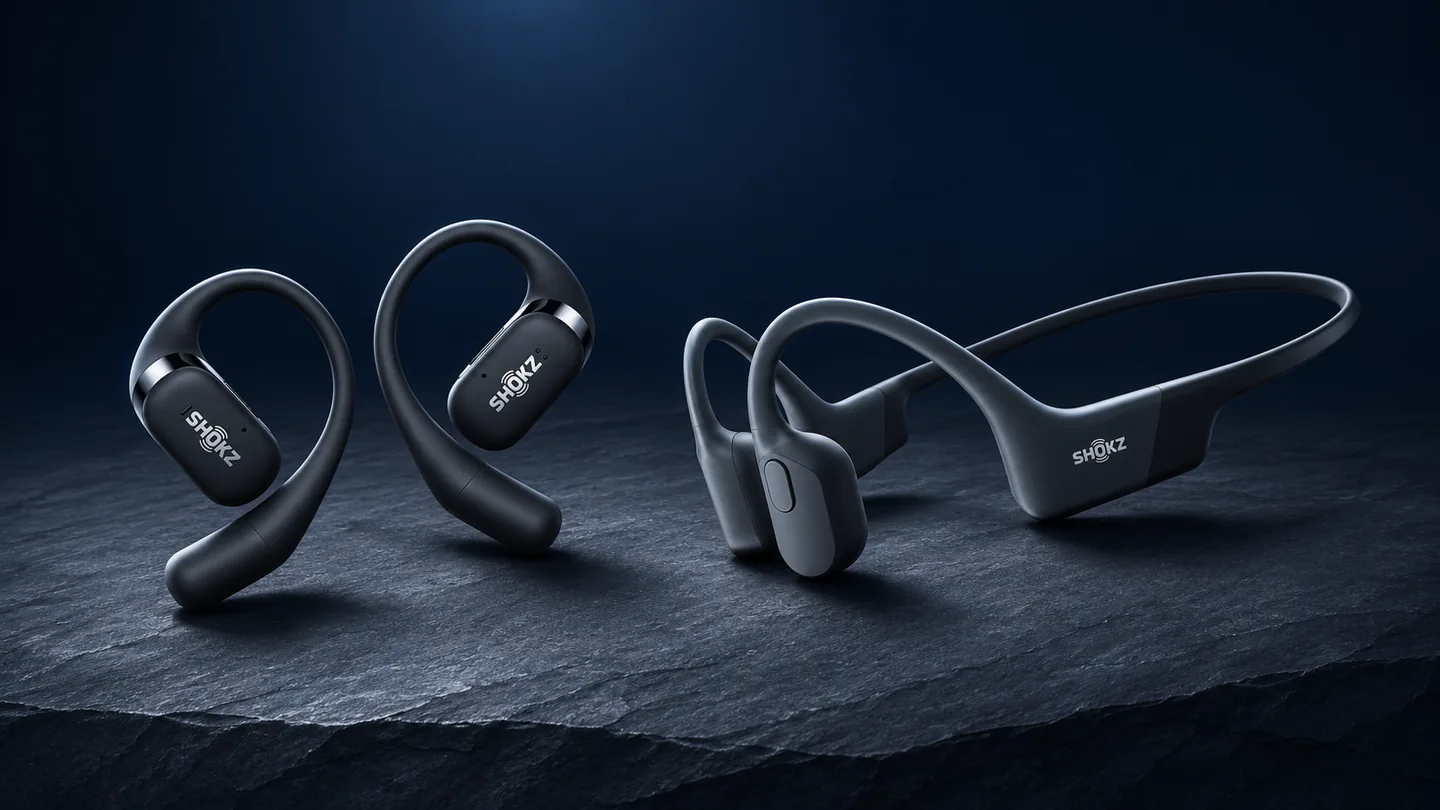
Start with the correct distinction: Open-ear describes an unsealed ear canal. Bone conduction is one way an open-ear headphone can deliver sound. The useful shopping comparison is open-ear air conduction, bone conduction or a hybrid, followed by fit and features.
Comparing open-ear vs bone-conduction headphones can be confusing because the labels overlap. A speaker near the ear and a contact transducer beside it can both belong to the open-ear category. Separating wearing style from sound delivery makes the buying decision clearer.
This source-based comparison was checked on November 3, 2026. QGH has not conducted a comparative listening, microphone, fit or durability test. Original Shokz OpenFit and OpenRun are illustrative examples; all three images are AI-generated editorial illustrations based on fresh manufacturer references.
Open-ear is the umbrella, not a competing technology
Soundcore’s category guide includes both air conduction and bone conduction within open-ear headphones. The shared characteristic is leaving the ear canal unsealed. It does not establish one universal shape, feature set or listening result.
Wearing arrangement
Where the hardware rests and whether it seals the ear canal: clips, hooks and a connected band are different physical choices.
Sound delivery
How the product creates the audio you hear: an air-conduction speaker, a contact transducer for bone conduction, or both.
Keep those two questions separate when reading a store listing. A hook describes support, Bluetooth describes a connection, and a microphone’s noise reduction describes call processing. None is enough to identify the complete listening technology. For the wider range of shapes, see our open-ear earbud format guide.
How air conduction and bone conduction differ
Shokz’s technical FAQ distinguishes sound traveling through air toward the ear canal from vibrations transmitted through contact with the bones around the ear. With an open-ear air-conduction product, a speaker stays outside the canal. A bone-conduction design relies on its intended contact position beside the ear.
| Design | Sound-delivery approach | Representative example | Check in the exact model |
|---|---|---|---|
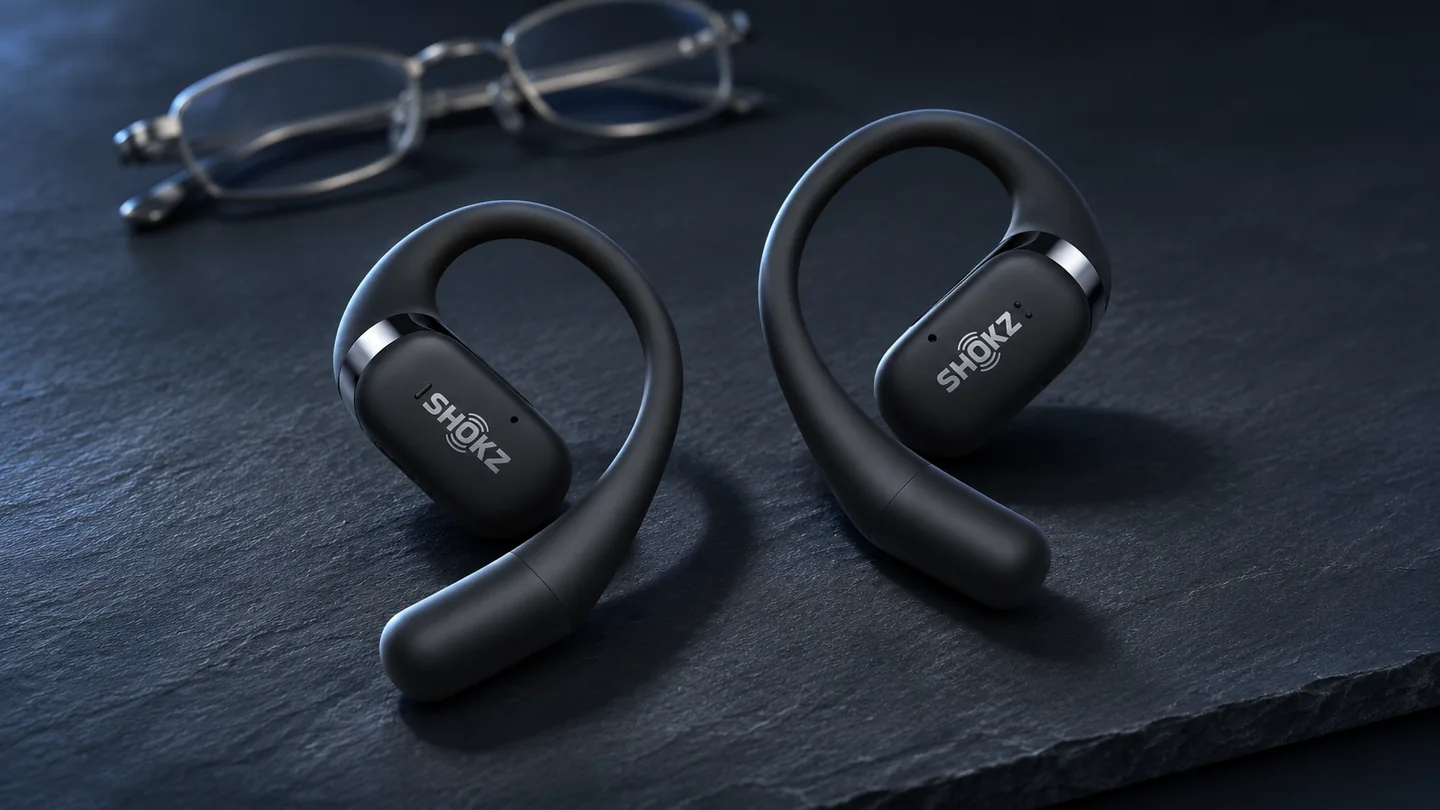
| Open-ear air conduction | A nearby speaker directs sound toward the ear opening | Original Shokz OpenFit | Speaker position, hook or clip geometry, controls |
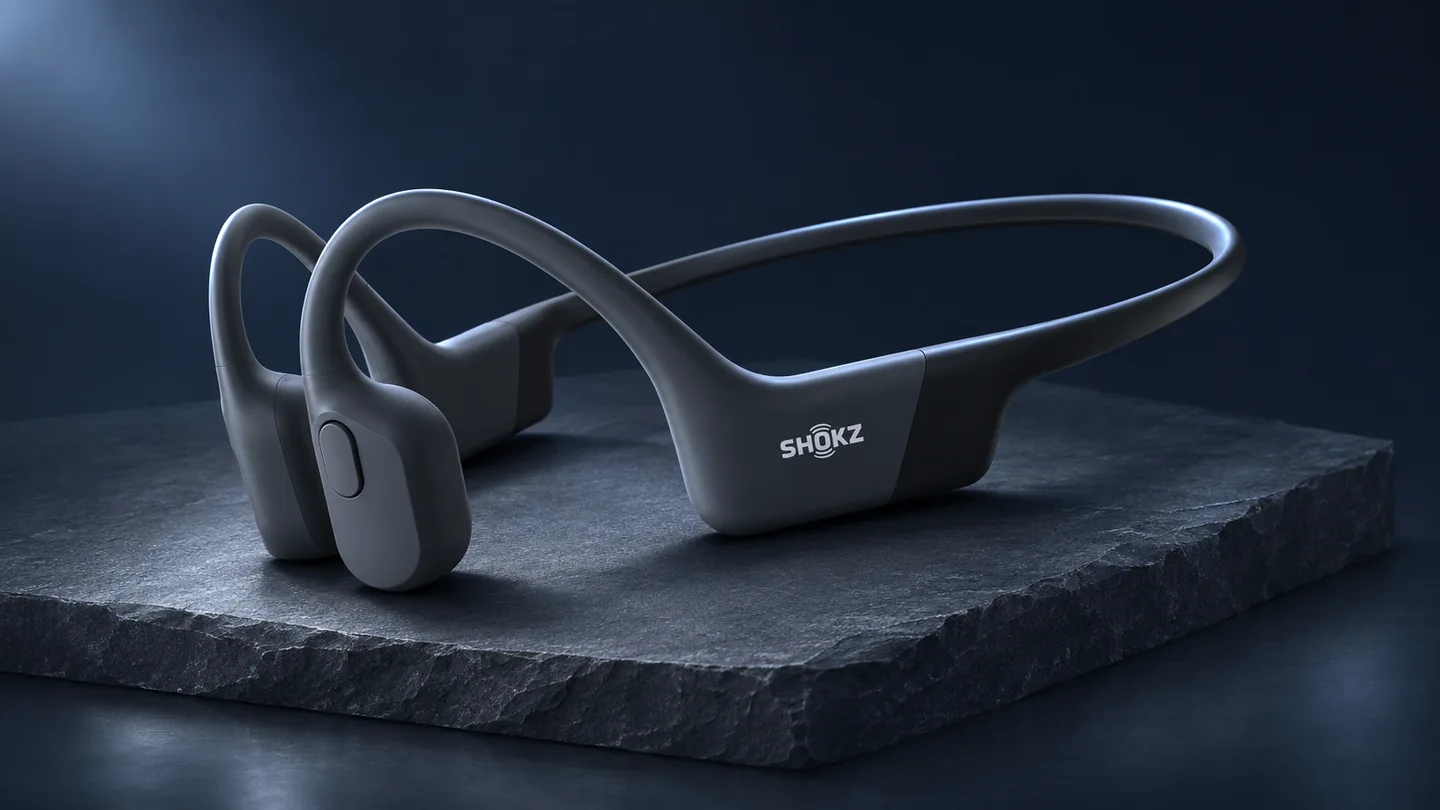
| Open-ear bone conduction | A contact transducer transmits vibrations | Original Shokz OpenRun | Contact position, band size and clearance |
| Open-ear hybrid | Bone and air-conduction drivers are combined | Shokz OpenRun Pro 2 | Driver combination, listening modes and fit |
The original OpenFit support page explicitly says that model does not use bone conduction. The OpenRun documentation identifies bone-conduction operation. These examples clarify the labels; they do not establish which one will sound better to you.
Hybrid headphones make the label less simple
Shokz documents two driver types in OpenRun Pro 2: bone conduction for mid and high frequencies and a separate air-conduction driver for bass. Its Classic mode uses the bone-conduction driver alone. That is why a product marketed in a bone-conduction range may also include an air speaker.
A hybrid is an additional design choice. Its presence does not prove stronger sound, better comfort or better value for your routine. Compare the actual model and modes you expect to use, rather than assuming a technology name provides a performance ranking.
Compare what touches your head
For a separate ear-hook pair, try each side with your glasses and check whether the speaker remains where the manufacturer intends. For a connected band, check the contact pads, available sizes and the space behind your head. A seatback, hat or collar belongs in that fit trial if it is part of your everyday use.
These are questions to test, not claims that every design will collide with those accessories. Make the comparison under the same conditions: usual glasses, normal head movement and a similar listening session. Our wearing guide provides the broader preparation checks. Follow each model’s own instructions for placement.
Use your routine to narrow the shortlist
| Your routine | Useful comparison | Decision to make |
|---|---|---|
| Conversation and desk listening | Comfort, controls, microphone results and sound leakage | Which exact pair works in your shared room? |
| Exercise | Contact stability, glasses and movement | Can you confirm the fit during a suitable trial? |
| Travel or long seated sessions | Band clearance, charging and packing | Does the hardware fit the way you sit and carry it? |
| Focused listening in a noisy place | Your need for isolation and actual noise-control features | Is an open listening arrangement what you want? |
Do not infer call quality from the playback technology. Compare microphone evidence separately. Likewise, look up battery claims, charging connections, app support and device switching for the exact product. A category label cannot answer those ownership questions.
For a recent clip-on example, our Galaxy Buds On review separates the physical design from phone-dependent functions. Those software limits remain a separate decision from the air-versus-bone comparison here.
An open ear is not a performance or safety guarantee
Leaving the canal unsealed does not establish silence for people nearby, perfect audibility of your surroundings or a fixed level of comfort. QGH has not measured those outcomes for these examples. Treat manufacturer claims as claims until you have relevant evidence for the model and setting.
An open design is not a safety system. Keep the buying decision grounded in the activity, environment and instructions rather than assuming an unobstructed ear solves every concern. The comparison here concerns consumer audio design and does not make medical claims.
Choose a design, then verify the product
Decide which contact points and support structure you want to try.
Read the exact model’s air, bone or hybrid description.
Check calls, controls, charging and your usual accessories.
There is no category-wide winner in this comparison. A useful shortlist starts with a wearing arrangement you can tolerate, continues with confirmed features and ends with evidence about the actual listening experience. Keep a pair that already meets those needs; change it when the new design addresses a clear limitation.
Common questions
Are all open-ear headphones bone conduction?
No. Open-ear describes leaving the ear canal unsealed. Products may use air conduction, bone conduction or a hybrid arrangement.
Does a neckband prove that a headphone is bone conduction only?
No. Shokz OpenRun Pro 2 is a documented example combining bone and air-conduction drivers. Identify the exact model and mode.
Which type is better for calls?
The playback method alone cannot establish microphone quality. Look for model-specific call evidence and check the phone and connection you will use.
Sources and scope
Soundcore: open-ear category · Shokz technical FAQ · Original OpenFit support · Original OpenRun support · OpenRun Pro 2 driver and mode documentation. Checked November 3, 2026. These primary manufacturer sources document designs and claims, not independent QGH test results. Product examples are not a ranking. The three visuals were generated for QGH from freshly retrieved official images, without using WordPress media as references.