


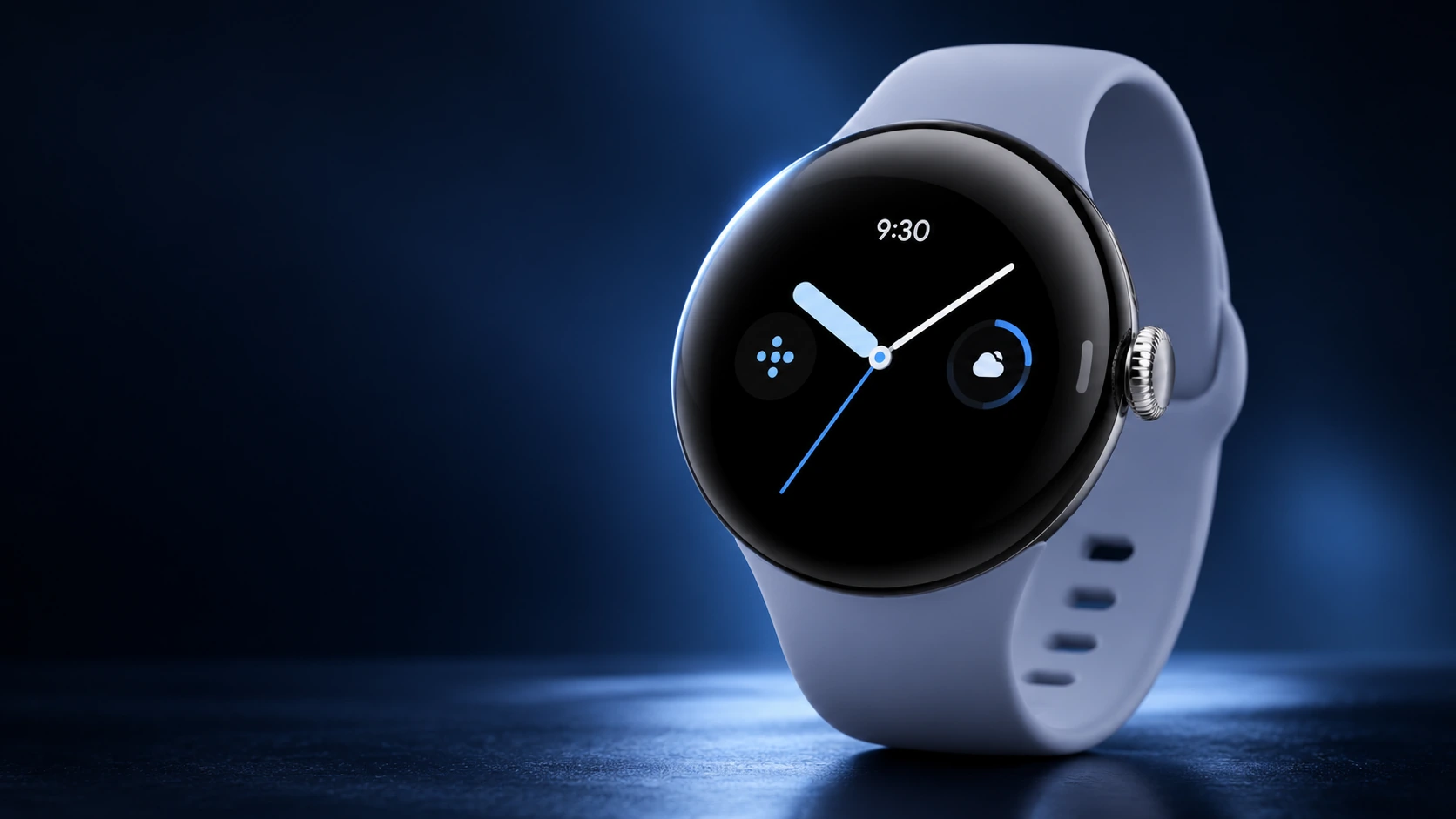
Google Pixel Watch 4 remains one of the most complete Android smartwatches you can buy in 2026. It combines a bright 3,000-nit display, noticeably better battery life, dual-frequency GPS, Fitbit health tracking, Gemini on the wrist and a more repairable design than earlier Pixel Watch generations.
That does not automatically make it the right watch for everyone. Google still relies on a proprietary charger, Gemini can be inconsistent, and Samsung remains a strong alternative for buyers who prefer a more traditional watch design. Here are the seven things that matter most before buying the Pixel Watch 4 in the U.S. today.
1. The Pixel Watch 4 is still built around two sizes
Google sells the Pixel Watch 4 in 41mm and 45mm versions. Both use the same rounded design language, Snapdragon W5 Gen 2 platform, Wear OS 6, 32GB of storage and 2GB of RAM. The larger model gives you more screen area and a substantially larger battery, while the 41mm version is lighter and better suited to smaller wrists.
The 41mm case weighs 31g without the band, compared with 36.7g for the 45mm model. Both use recycled aluminum and support IP68 water and dust resistance plus 5 ATM water resistance.
2. Battery life is one of the biggest reasons to choose the 45mm model
Google officially rates the 41mm Pixel Watch 4 for up to 30 hours with the always-on display enabled and up to 48 hours in Battery Saver mode. The 45mm model increases those figures to up to 40 hours with the always-on display and up to 72 hours with Battery Saver.
Independent testing has been even more encouraging. The Verge reported roughly a day and a half from the smaller model and around 36 to 45 hours from the 45mm watch with the always-on display enabled. Tom’s Guide has also recorded significantly longer real-world endurance from the larger model in comparative testing.
Charging is quick as well. Google says both sizes can reach 50% in around 15 minutes. The trade-off is that the Pixel Watch 4 uses another proprietary charging dock instead of a universal wireless charging standard.
3. The 3,000-nit Actua 360 display is excellent outdoors
The Pixel Watch 4 uses Google’s Actua 360 AMOLED LTPO display with a peak brightness of up to 3,000 nits and a refresh range of 1–60Hz. That is a meaningful upgrade for outdoor readability and makes notifications, navigation and workout data easier to check in direct sunlight.
The domed design is more than cosmetic. Google reduced the bezels compared with the previous generation and shaped Wear OS 6 around the curved edge, so tiles and controls use more of the visible screen. The Verge specifically praised the larger usable area and the way Material 3 Expressive adapts to the circular display.
4. Gemini is useful, but it is not a reason to buy the watch by itself
Pixel Watch 4 puts Gemini directly on your wrist. Raise to Talk lets you activate the assistant by lifting your wrist instead of pressing a button, and Google also supports AI-powered Smart Replies and shortcuts for common requests.
The implementation is convenient for quick tasks such as setting reminders, controlling smart-home devices or asking short questions. It is less convincing for multi-step requests, where latency and handoff to the phone can still make the experience feel inconsistent. In The Verge’s testing, Raise to Talk felt natural after adjusting sensitivity, while Gemini itself remained somewhat hit-or-miss.
If you are already interested in Google’s broader AI hardware strategy, the Pixel Watch 4 fits naturally alongside devices such as the Google Pixel 11, where Gemini and on-device AI are becoming increasingly central to the overall experience.
5. Health and fitness tracking are among its strongest features
Google combines Fitbit tracking with dual-frequency GPS, improved automatic activity detection, skin temperature sensing, ECG support, SpO2 hardware and a new generation of sleep algorithms. Automatic tracking can recognize common activities such as walking, running, cycling, rowing and elliptical workouts after enough movement is detected.
Dual-frequency GPS is particularly important for runners and cyclists in dense cities or wooded areas. Independent testing found the route maps much improved compared with older Pixel Watches, although the best dedicated sports watches and Apple’s Ultra models can still produce more consistently precise tracks in difficult conditions.
Google’s health platform is also evolving. The Fitbit app has transitioned toward the Google Health experience, with Gemini-powered coaching positioned as a more personalized layer on top of activity, sleep and recovery data.
6. Repairability is a quiet but important upgrade
Earlier Pixel Watches were frustrating to repair, especially when the glass or battery was damaged. Pixel Watch 4 changes that by using accessible screws and a design that allows the battery and display to be serviced more directly.
That does not make the watch rugged in the way a dedicated outdoor smartwatch is rugged, but it can improve long-term ownership. A smartwatch is usually worn daily and exposed to impacts, sweat and charging cycles, so repairability can matter more over three or four years than another software feature at launch.
7. Satellite SOS and Android compatibility broaden its appeal
Pixel Watch 4 supports Satellite SOS communication for emergencies when cellular connectivity is unavailable. It is designed as a backup safety feature rather than a replacement for normal mobile service.
The watch also works with most phones running Android 11 or newer, so you do not need a Pixel phone for the core experience. Some AI features can still depend on a recent Pixel handset, but Fitbit tracking, Wear OS apps, notifications and most everyday functionality are broadly available across Android.
Pixel Watch 4 vs Apple Watch Series 12
| Feature | Pixel Watch 4 | Apple Watch Series 12 |
|---|---|---|
| Platform | Android | iPhone |
| Starting U.S. MSRP | $349.99 | $399 |
| Sizes | 41mm / 45mm | Apple lineup dependent |
| Always-on battery | Up to 30h / 40h | About 24h class |
| AI assistant | Gemini | Siri / Apple Intelligence features |
| GPS | Dual-frequency | Integrated GPS |
| Repairability | Improved, serviceable design | More limited user serviceability |
These watches serve different ecosystems, so the decision is mostly determined by your phone. If you use Android, Pixel Watch 4 offers one of the strongest combinations of design, battery life, health tracking and software integration. If you use an iPhone, Apple’s watch remains the natural choice. You can read our full breakdown of the Apple Watch Series 12 for the other side of that comparison.
Is the Google Pixel Watch 4 worth buying in 2026?
For Android users, yes — especially if you value Fitbit health tracking, a compact design, a bright display and longer battery life than older Pixel Watch generations. The 45mm version is the stronger choice for endurance, while the 41mm model remains more comfortable on smaller wrists.
The biggest reasons to look elsewhere are ecosystem preference, the proprietary charger and the fact that Gemini is still not consistently transformative on a smartwatch. Samsung remains compelling if you prefer a more traditional watch shape, while dedicated Garmin-style sports watches offer much longer battery life and deeper training tools.
What makes Pixel Watch 4 notable is balance. It no longer feels like Google is asking buyers to accept obvious hardware compromises in exchange for software integration. Battery, display, GPS, repairability and health tracking are all competitive enough that the watch can stand on its own merits.
QGH perspective
Pixel Watch 4 is a useful example of Google’s broader hardware strategy in 2026: AI is becoming part of the interface, but the most meaningful improvements are often traditional hardware fundamentals. Better battery life, a brighter display, faster charging and repairability matter every single day, while Gemini is an added layer rather than the entire reason to buy.
For more Android hardware coverage, see our Pixel 11 buying guide. You can also browse QGH Tech News and our product reviews.
Sources and methodology
This article is a research-based buying guide, not a hands-on Quantum Gadget Hub test. Specifications, battery ratings, compatibility and durability information were checked against Google’s official Pixel Watch 4 specifications and product pages. Independent battery, fitness, GPS, software and usability observations were cross-checked against The Verge, Tom’s Guide and Android Central. Manufacturer claims are identified as such and separated from independent test results.