


QGH review methodology: Quantum Gadget Hub has not tested the iPhone Duo hands-on. This iPhone Duo review is a research-based pre-release assessment combining Apple’s official specifications and launch information with early independent hands-on impressions. The phone does not begin shipping until October 23, 2026, so long-term battery, durability and camera conclusions remain provisional.
Table of Contents
iPhone Duo review: quick verdict
The iPhone Duo is Apple’s first foldable iPhone and one of the company’s most ambitious hardware changes in years. Its 7.6-inch inner OLED display, compact 5.4-inch outer screen, A20 Pro chip, titanium construction and fold-aware iOS 27 interface make it more than a conventional iPhone with a hinge. Early hands-on impressions also suggest Apple has paid unusual attention to crease visibility, display continuity and hinge feel.
The trade-off is price. At a starting price of $1,999 in the United States, iPhone Duo costs substantially more than Apple’s conventional flagship phones. It is also heavy at 254g, and buyers will be adopting a first-generation Apple foldable before long-term hinge and display durability are known. For early adopters who specifically want a foldable iPhone, the package is compelling. For most buyers, the value case is harder to justify.
Design and foldable displays
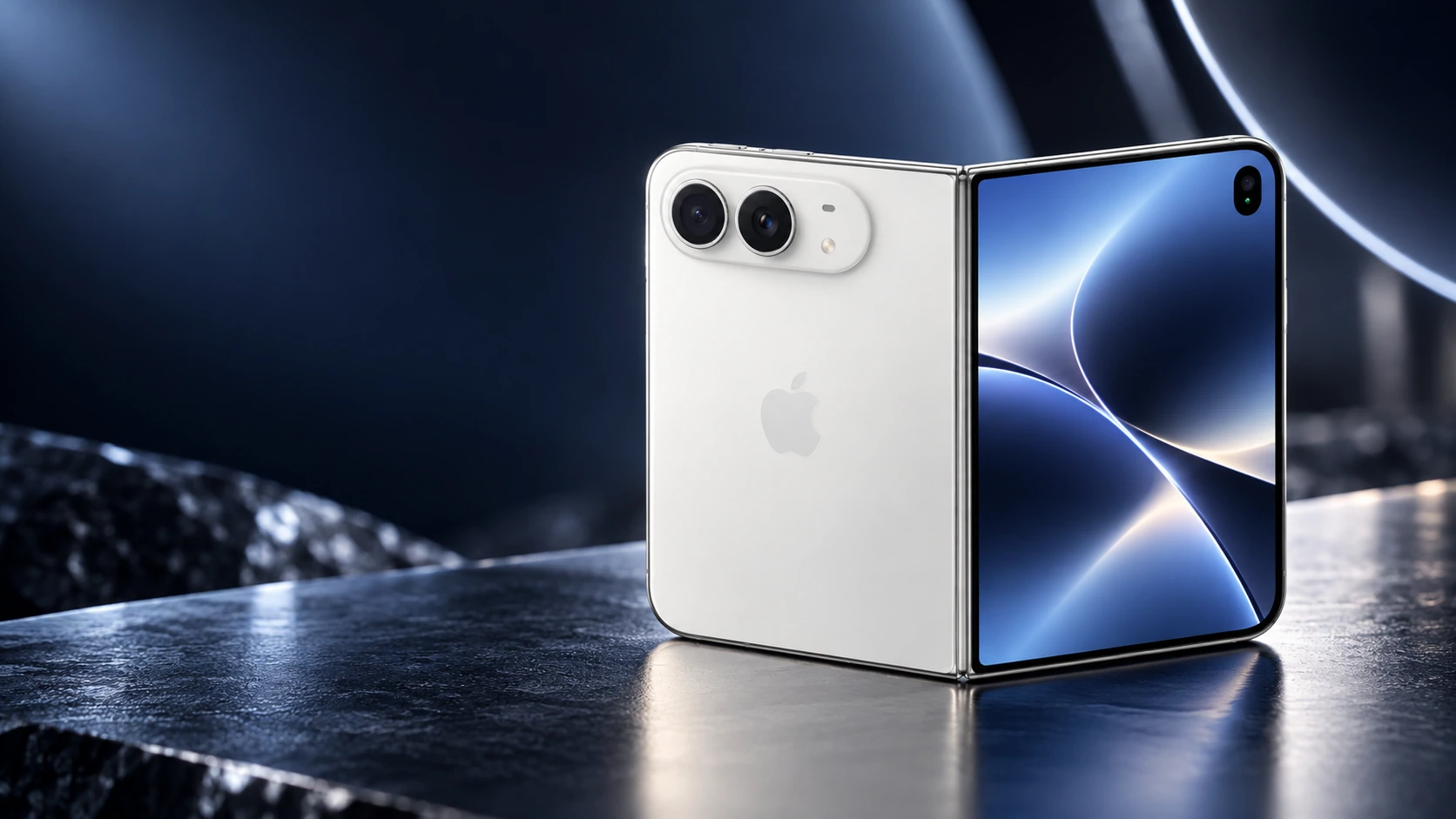
iPhone Duo uses a book-style folding design with a grade 5 titanium structure. Opened, it measures 5.2 mm thick and provides a 7.6-inch Super Retina XDR OLED inner display. Closed, it is 11.3 mm thick with a 5.4-inch outer OLED display. The phone weighs 254g.
Both displays support ProMotion up to 120Hz, Always-On display functionality, HDR and up to 3,000 nits of peak outdoor brightness. Apple applies a nano-texture finish to the inner display to reduce glare and make the crease less noticeable. The outer display uses Ceramic Shield 2, while the rear uses Ceramic Shield. Apple also rates the device IP68 for water and dust resistance.
The Verge’s early hands-on impressions described the hinge as smooth and the crease as difficult to notice in normal use. That is encouraging, but it is not a substitute for months of independent durability testing. Foldables place far more mechanical stress on displays and hinges than conventional phones, so long-term reliability remains one of the biggest unanswered questions before launch.
A20 Pro performance and thermal design
Apple equips iPhone Duo with the A20 Pro, the same chip family used in the iPhone 18 Pro generation. Apple says the 2nm processor includes a 6-core CPU, 7-core GPU and dual 16-core Neural Engine, with 50% more unified memory bandwidth than A19 Pro.
The foldable design introduces a more unusual thermal system. A custom package connects A20 Pro to a vapor chamber so the phone can sustain performance during gaming, multitasking and on-device AI workloads. Apple claims up to 35% better sustained performance than iPhone 17 Pro, although that figure comes from Apple’s own comparison and will need independent benchmark verification once retail units ship.
The broader smartphone market is moving aggressively toward local AI and higher sustained performance. Our Snapdragon 8 Elite Gen 6 analysis shows the same trend on the Android side, where chipmakers are prioritizing NPU capability and efficiency alongside traditional CPU and GPU gains.
iOS 27 makes the fold matter
The most important part of iPhone Duo may be software rather than hardware. iOS 27 is adapted specifically for the dual-screen form factor. When opened, the larger display can show two Home Screen pages and supports multitasking layouts designed around the wider canvas. Interface elements shift position depending on how the phone is held or folded, and apps can transition between the outer and inner displays.
Apple also supports tent-style and partially folded use cases for video, FaceTime and camera workflows. This is where Apple’s control over both hardware and software could become an advantage. A foldable only becomes useful when apps, windowing and system navigation make the larger screen meaningfully more productive than a standard phone.
Cameras: flexible, but not Apple’s most complete system
The rear camera system combines a 48MP Fusion Main camera with sensor-shift stabilization and an optical-quality 2x crop, plus a 48MP Fusion Ultra Wide camera with macro capability. The foldable form adds several practical shooting modes: users can preview rear-camera selfies on the outer display, show subjects a live preview while framing a shot, and prop the phone open for hands-free video.
Video reaches 4K at up to 120 fps in Dolby Vision on the main camera. Apple also adds upgraded computational photography features and AI-assisted editing. The limitation is that iPhone Duo does not include the more flexible dedicated telephoto range associated with Apple’s highest-end Pro camera systems. Buyers who prioritize long-range photography may therefore prefer a conventional Pro model.
Battery life and charging
Apple uses a dual-battery architecture, placing a battery on each side of the fold. The company rates iPhone Duo for up to 31 hours of video playback using the inner display, up to 44 hours using the outer display, or up to 24 hours of mixed use across both screens.
Fast charging can reach 50% in around 20 minutes with a compatible wired charger. Apple also supports MagSafe and Qi2 wireless charging, with a claimed 50% charge in around 30 minutes under supported conditions. These are manufacturer estimates, and real-world endurance will depend heavily on how often users rely on the larger inner display.
Price and storage
iPhone Duo starts at $1,999 in the United States with 256GB of storage. Apple also offers 512GB, 1TB and 2TB capacities. Pre-orders begin October 16, 2026, with general availability beginning October 23 in the first wave of markets.
The $1,999 starting price is the clearest obstacle. Apple is positioning Duo as a premium new category rather than a replacement for the standard iPhone lineup. The value proposition therefore depends on whether the foldable display changes how much you can actually do with the phone. If the inner screen mostly becomes a larger version of the same apps, the premium is difficult to defend. If multitasking, reading, video, gaming and Pencil support become central to daily use, the extra cost is easier to understand.
Who should buy iPhone Duo?
- Apple users who have specifically been waiting for a foldable iPhone.
- People who regularly multitask, read, watch video or work on a larger mobile display.
- Early adopters comfortable paying a premium for a first-generation form factor.
- Users who value Apple’s hardware-software integration more than maximum value per dollar.
Who should skip it?
- Buyers who simply want the best conventional iPhone for less money.
- Camera-first users who want the most flexible telephoto system.
- People concerned about first-generation foldable durability.
- Anyone for whom 254g is too heavy for comfortable everyday use.
QGH final verdict
iPhone Duo looks like a serious first-generation foldable rather than an experimental side project. Apple has combined a refined hinge, two high-end OLED displays, A20 Pro performance and a version of iOS designed around folding rather than simply stretched across a larger screen. Early hands-on impressions suggest the hardware execution is strong.
The two reasons for caution are equally significant: $1,999 is a very high starting price, and no launch-day specification can prove how a folding display and hinge will age after a year or two of daily use. Our current 4.0/5 editorial score reflects the strength of the announced hardware and early hands-on evidence while reserving room for long-term testing after retail availability.
Where to buy and link disclosure
Merchant: Apple. The product button links to Apple’s official iPhone Duo page. The link is not an affiliate link. U.S. pricing cited in this review is Apple’s announced starting MSRP and may differ by storage capacity, region, taxes and promotions.
Sources & methodology
This is a research-based pre-release review, not a hands-on Quantum Gadget Hub test. Specifications, pricing and availability were checked against Apple’s official iPhone Duo launch announcement and Apple’s technical specifications. Early design and usability impressions were cross-checked against The Verge’s hands-on coverage. QGH separates manufacturer claims from independent observations and will update this review after broader retail testing becomes available. See more buyer-focused coverage in our Reviews hub and follow new device launches in Tech News.