


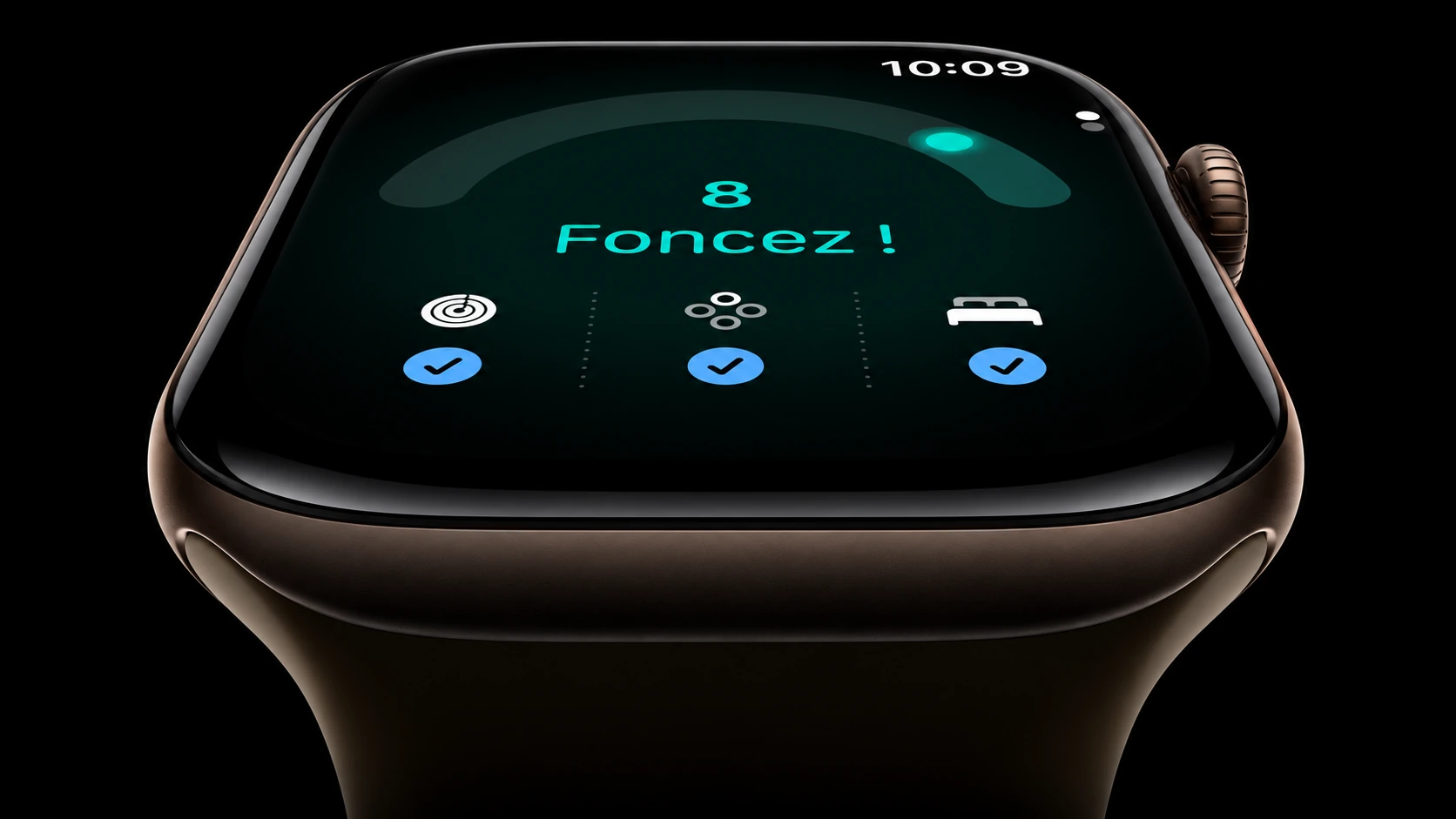
Apple Watch Series 12 is less about a dramatic redesign and more about what Apple wants the Watch to become next: a more proactive health device with faster sensing, stronger AI features and a deeper role in daily readiness, safety and fitness.
Apple launched Series 12 in the U.S. at $399, with new aluminum, titanium and ceramic finishes, the S11 chip, a redesigned Health Sensing System, higher-frequency heart-rate and HRV tracking, a readiness score and new Audio Intelligence features. Apple also says battery life is improved versus the previous generation. The question for buyers is not whether Series 12 is the most advanced mainstream Apple Watch yet. It is whether those changes are meaningful enough to justify upgrading.
1. The biggest upgrade is the new Health Sensing System
The headline change is not the display or industrial design. It is the sensor platform underneath. Apple says Series 12 uses its new Health Sensing System with higher-frequency heart-rate and heart-rate-variability measurements, powered by the S11 chip. The company describes it as its most accurate heart-rate sensing system in a wearable to date.
That matters because many Apple Watch features depend on the quality and frequency of background measurements rather than on a single manual reading. More frequent HR and HRV sampling can improve the data used for recovery, fitness trends and health alerts. Apple also continues to support ECG, sleep tracking, sleep-apnea notifications, wrist-temperature sensing, cycle tracking and other health features, depending on region and device eligibility.
As always, manufacturer accuracy claims should not be treated as independent medical validation. The real value will become clearer as third-party testing compares Series 12 against chest straps, medical-grade equipment and previous Apple Watch generations.
2. Readiness score is Apple’s answer to Oura, Whoop and Fitbit
Apple is moving beyond basic activity rings. Series 12 introduces a readiness score designed to help users understand whether their body appears ready for a hard workout or would benefit from recovery.
The idea is familiar if you have used Oura, Whoop or Fitbit. Rather than presenting HRV, resting heart rate, sleep and recovery signals as isolated metrics, the watch combines them into a more understandable daily status. For mainstream users, that can be more useful than another raw sensor number.
The Verge’s early review argues that this shift is part of a broader change in Apple’s wearable strategy: the company is building toward a more continuous, AI-assisted health platform rather than simply adding one new fitness metric each year.
3. Audio Intelligence is unusual — and potentially important
Series 12 also introduces Apple’s new Audio Intelligence direction. Apple has described features such as Live Rewind and Siri-powered recaps that use ambient audio in new ways while emphasizing on-device processing and privacy controls.
Not every announced feature is available at launch. Some Audio Intelligence functions are scheduled to arrive through software updates later in 2026. That makes this an important distinction for buyers: Series 12 hardware is shipping now, but part of its long-term value proposition depends on software Apple is still rolling out.
If these features mature as intended, Apple Watch could become more context-aware without requiring users to constantly open apps. That is a much bigger strategic change than another watch face or workout type.
4. Battery life is better, but still not the reason to switch
Battery life remains one of the biggest differences between Apple Watch and longer-lasting fitness wearables. Apple rates Series 12 for up to 24 hours of normal use, which is an improvement over prior mainstream models but still means many owners will charge daily or close to daily.
That is enough for most users to track a full day and night when charging is built into a routine, but it does not compete with devices that last several days or more. Buyers who prioritize expedition-style battery life should still look at Apple Watch Ultra or competing Garmin, Amazfit and other endurance-focused wearables.
For mainstream iPhone users, the better way to think about Series 12 is efficiency rather than longevity. Apple is using the S11 chip and sensor redesign to gather more health information without turning the Watch into a significantly larger device.
5. The design is familiar, but materials are expanding
Series 12 keeps the familiar Apple Watch shape, so this is not the generation for buyers waiting for a radical visual redesign. Apple offers 42mm and 46mm sizes, with aluminum starting at $399 in the U.S.
The interesting change is the broader material lineup. Apple sells aluminum, titanium and ceramic versions, with titanium starting at a significantly higher price and ceramic positioned as the premium option. Apple also says Ceramic Shield 2 improves durability on aluminum models.
That gives buyers more ways to treat Apple Watch as either a practical fitness device or a premium wearable. It also makes configuration pricing more complicated, because cellular connectivity, case material, size and band choice can move the final price far above the $399 headline figure.
6. Series 12 makes the most sense for older Apple Watch owners
The upgrade case depends heavily on what is already on your wrist. Owners of much older Apple Watch generations can benefit from a collection of changes at once: better sensors, faster performance, improved display technology, newer safety features, stronger sleep tracking and the new health platform.
For owners of recent models, the decision is narrower. The Verge’s review notes that Series 12 feels more like the start of a new wearable era than a dramatic one-year hardware jump. If your current watch already feels fast, tracks the metrics you care about and still has healthy battery capacity, there may be little urgency to replace it immediately.
That changes if readiness scoring, higher-frequency health sensing or upcoming Audio Intelligence features match your use case. Those are the reasons to upgrade — not the exterior design.
7. $399 remains competitive, but value depends on ecosystem lock-in
At $399 for the entry aluminum GPS model in the U.S., Series 12 stays in familiar Apple Watch territory. Apple’s ecosystem remains its biggest advantage: tight iPhone integration, Apple Pay, messaging, safety features, Fitness+, health history and app support all work together with very little setup.
The trade-off is that Apple Watch still makes the most sense if you already use an iPhone. Android users should look elsewhere, and even iPhone users who prioritize battery life over ecosystem integration may find better value in dedicated fitness watches.
Apple Watch Series 12 pricing in the U.S.
| Configuration | U.S. starting price | Best for |
|---|---|---|
| Aluminum GPS | $399 | Most buyers |
| Titanium GPS + Cellular | From $699 | Premium materials + cellular |
| Ceramic GPS + Cellular | From $899 | Luxury / design-focused buyers |
Should you upgrade?
Series 12 is easiest to justify if you are coming from an older Apple Watch, care about health and recovery data, or want access to Apple’s next wave of AI-assisted wearable features. It is harder to justify as an automatic annual upgrade for owners of recent generations.
The most important thing about Series 12 may be what it represents: Apple is turning the Watch from a smartwatch with health features into a health and context device that happens to be a smartwatch. The new sensors, readiness score and Audio Intelligence roadmap all point in that direction.
If you are also evaluating Apple’s newest hardware, see our iPhone 18 Pro variable-aperture explainer and our iPhone Duo review. For more launches, visit QGH Tech News.
Sources and methodology
This article is a research-based buying guide, not a hands-on Quantum Gadget Hub test. Specifications, U.S. pricing, availability and Apple feature claims were checked against Apple’s official Series 12 announcement and U.S. Store pages. Independent interpretation was cross-checked against The Verge’s Series 12 review and recent smartwatch testing from Tom’s Guide. Manufacturer performance claims are identified as such rather than presented as independent measurements.