


QUICK VERDICT
The short version
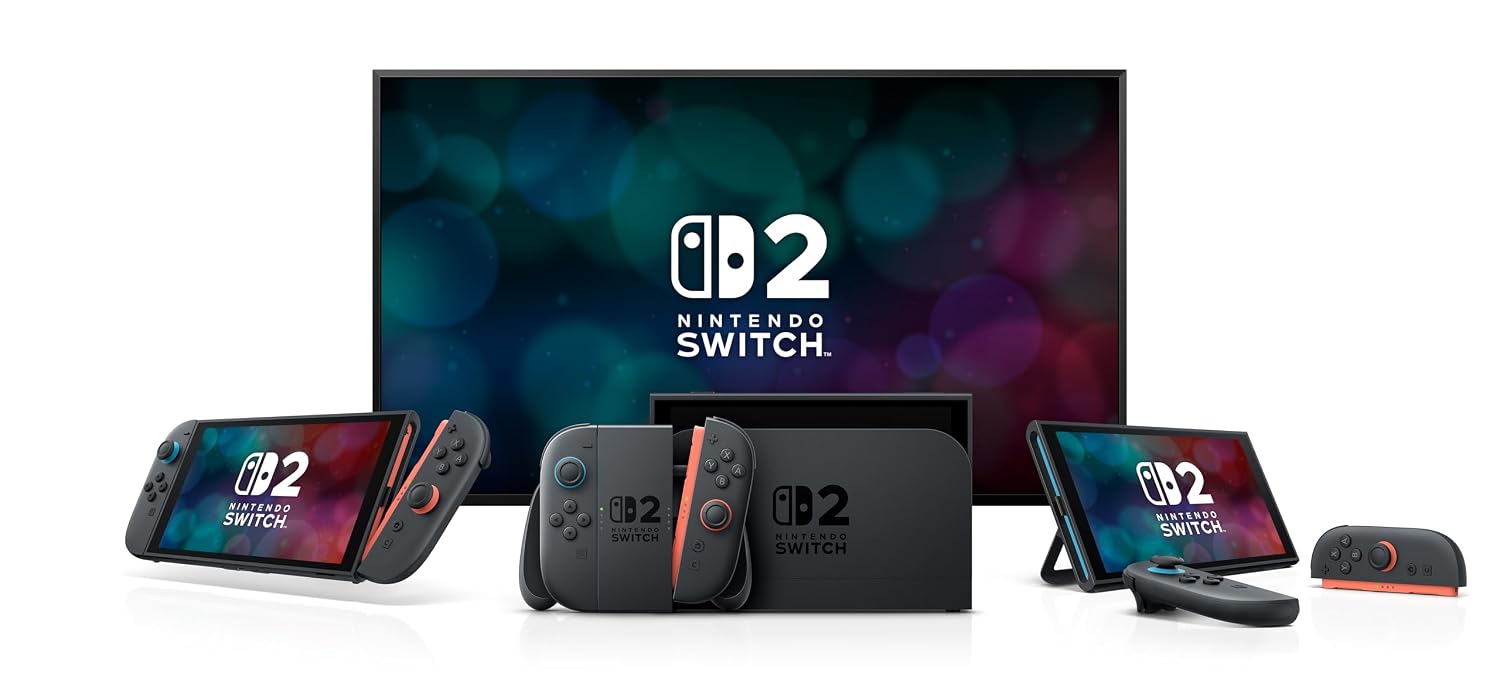
Nintendo Switch 2 is an evolutionary upgrade rather than a reinvention. Its 7.9-inch 1080p LCD, HDR10 support, variable refresh rate up to 120 Hz, 256 GB of internal storage, magnetic Joy-Con 2 controllers and stronger TV output make the hardware substantially more capable than the original Switch. The trade-offs are equally clear: Nintendo rates battery life at roughly 2 to 6.5 hours, the system is heavier in handheld use, expandable storage requires microSD Express, and the U.S. MSRP increased to $499.99 in September 2026. It makes the most sense for players who want Nintendo’s current generation of games and a better hybrid experience, not for owners who are still fully satisfied with the original Switch library.
What it does well
✓ Larger 7.9-inch 1080p display with HDR10 and VRR up to 120 Hz
✓ Much stronger hardware and up to 4K/60 output in supported TV-mode games
✓ 256 GB internal storage and compatibility with many Nintendo Switch games
✓ Magnetic Joy-Con 2 controllers add cleaner attachment and mouse-style input in compatible games
Where it falls short
– Official battery estimate of roughly 2 to 6.5 hours
– Higher U.S. MSRP of $499.99 from September 2026
– Heavier than the original Switch in handheld use
– Storage expansion requires faster microSD Express cards
What is Nintendo Switch 2?
Nintendo Switch 2 launched on June 5, 2025 as the successor to Nintendo’s original hybrid console. The basic idea remains unchanged: one system can be used as a handheld, placed on a table, or connected to a television. The hardware is significantly newer, however. Nintendo specifies a 7.9-inch 1920×1080 LCD with HDR10 and variable refresh rate up to 120 Hz, a custom NVIDIA processor, 256 GB of UFS storage, Wi-Fi 6, two USB-C ports and support for compatible Nintendo Switch software. In TV mode, supported games can output up to 4K at 60 fps, while 1080p and 1440p modes can support up to 120 fps.
Design and everyday usability
The Switch 2 is larger than its predecessor, measuring roughly 116 × 272 × 13.9 mm with the Joy-Con 2 controllers attached and weighing about 535 g in that configuration. The larger screen is one of the most immediately useful upgrades because it increases usable display area without abandoning portability. Joy-Con 2 attach magnetically instead of using the original rail system, and each controller includes a mouse sensor for compatible games. Nintendo also added a second USB-C port on the top edge, which is useful for charging or accessories while the console is on a table. The main compromise is weight: independent reviewers have generally found the system more substantial in the hands, and comfort can depend on session length and grip preference.
Features and real-world performance
The stronger processor is the central upgrade. It gives developers more headroom for higher resolutions, smoother frame rates and more demanding third-party releases than the first Switch could comfortably handle. Nintendo’s own specifications support up to 4K/60 output in TV mode and up to 120 fps at 1080p or 1440p in supported games. By 2026, the software library has also become more convincing, with a growing set of Switch 2 exclusives and major third-party releases. Backward compatibility adds value for existing Switch owners, although Nintendo notes that not every original Switch game or accessory is fully compatible. GameChat adds system-level voice chat, screen sharing and optional video chat, but since April 2026 it requires a Nintendo Switch Online membership.
Battery life is the clearest hardware limitation. Nintendo estimates approximately 2 to 6.5 hours depending on the software and features in use. That is workable for many commutes and shorter sessions, but it is not a strength for players who prioritize long unplugged play.
Value for money
Value is more complicated in late 2026 than it was at launch. Nintendo launched the system in the U.S. at $449.99, then raised the official U.S. MSRP to $499.99 from September 1, 2026. Pricing varies by country and retailer. At that price, the Switch 2 is easiest to justify for buyers who specifically want Nintendo’s new exclusives, hybrid play and access to a growing library of more technically ambitious games. It is harder to justify as a casual upgrade for someone whose existing Switch still covers most of what they play.
Who should buy it?
Players who want Nintendo’s newest first-party games, people who regularly switch between handheld and TV play, and existing Switch owners who care about the larger screen, stronger performance and improved third-party support will get the clearest benefit.
Who should skip it?
Budget-conscious players, people who mainly play older Switch games, and handheld-first users who value long battery life above performance may be better served by keeping an existing Switch or considering another portable platform.
ALTERNATIVES
What else should you consider?
Nintendo Switch OLED
A sensible option if your priority is the existing Switch library and an OLED handheld screen rather than access to Switch 2 exclusives and newer hardware.
Steam Deck OLED
Worth considering if you want a large PC game library, more software flexibility and do not need Nintendo’s first-party exclusives.
PlayStation 5
A stronger fit for players who care more about high-end TV gaming than portability or Nintendo’s hybrid format.
FINAL VERDICT
Should you buy Nintendo Switch 2?
Yes, if you want Nintendo’s current-generation hybrid console and expect to use the new exclusives, improved performance and stronger TV output. The main reasons to hesitate are the $499.99 U.S. MSRP, modest battery life and the fact that the core Switch experience remains familiar rather than radically new. For a new buyer who specifically wants Nintendo games, Switch 2 is the more future-facing choice. For a satisfied original-Switch owner, the upgrade is most compelling when the new software library—not the hardware alone—gives you a reason to move.
Where to buy and link disclosure
Merchant: Amazon. The “Check Price on Amazon” button points to a direct product listing. This temporary link is not an affiliate link. The $499.99 figure cited in this review is the U.S. MSRP, not a live Amazon price. Check the seller, region and final price before buying.
How this review was prepared
This is a research-based editorial review, not a hands-on Quantum Gadget Hub test. We used current official Nintendo specifications, feature documentation and pricing information, then cross-checked the overall strengths and limitations against independent published reviews and one-year retrospectives from established gaming publications. The 4.0/5 score is an editorial rating based on the evidence summarised above and does not represent a hands-on Quantum Gadget Hub test. Featured image photo by AOMAF2024 via Wikimedia Commons, released under CC0 1.0. See more buyer-focused analysis in our Reviews hub. Sources consulted include Nintendo’s official Switch 2 technical specifications, feature and GameChat pages, Nintendo’s May 2026 U.S. price-revision notice, and independent coverage from GameSpot and Tom’s Guide. Pricing and software availability can change by region and over time.